The Kill Chain Is Software Now
The US struck Iran after a helicopter was downed. Most people are arguing about geopolitics. I'm looking at the targeting systems, the sensor fusion pipelines, and the latency requirements that make a strike decision in 2025 look more like a distributed system than a war movie. The engineering here is genuinely insane.
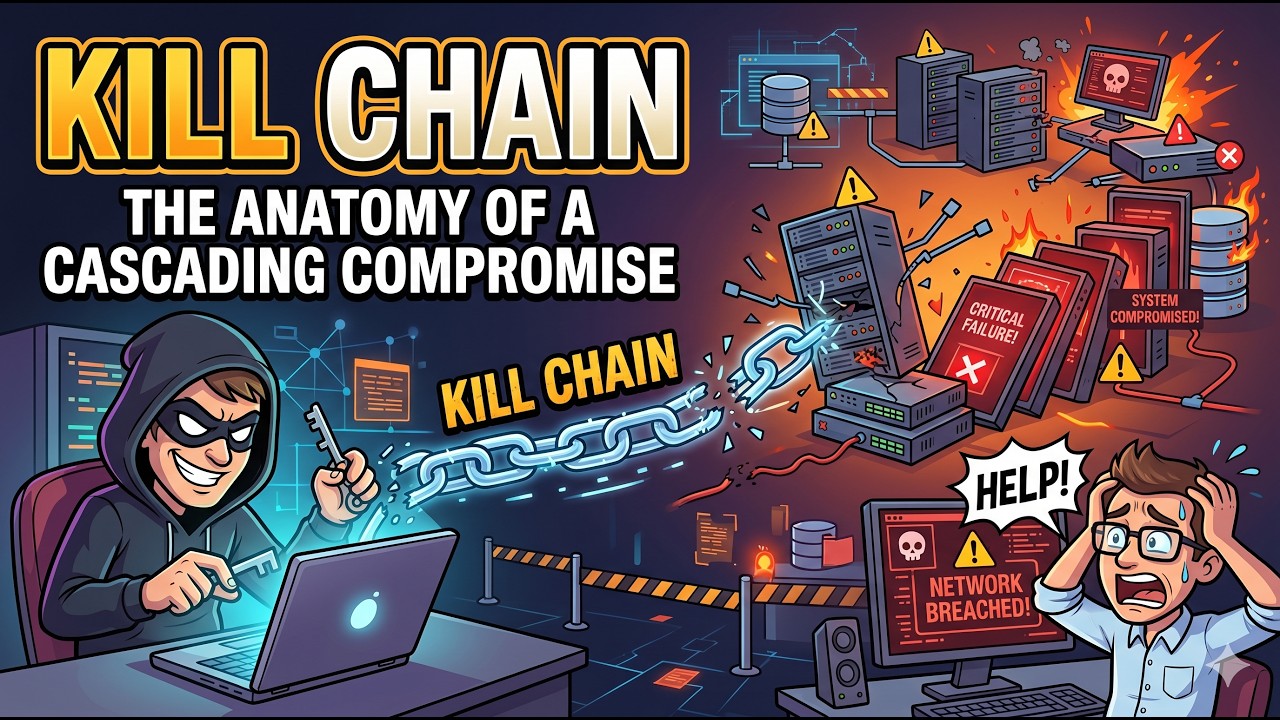
The US military struck Iran-backed targets after a downed helicopter. One sentence of news. Now let's talk about what's actually running under the hood, because the targeting infrastructure behind a modern strike operation is the most extreme version of a real-time data pipeline you'll ever see.
The Kill Chain Is a DAG
Most engineers have never heard of JADC2. Joint All-Domain Command and Control. It's the DoD's ongoing nightmare project to fuse sensor data from satellites, drones, ground radar, SIGINT collection, and human intelligence into a single targeting picture in near-real-time. Think of it as a directed acyclic graph where every node is a sensor platform and every edge is a data link with specific latency and bandwidth constraints.
The hardest part isn't the sensors. It's the fusion layer. You've got data arriving in completely different formats, at completely different rates, with completely different confidence intervals, and you have to reconcile them into a single track. A Predator drone sees a vehicle. A signals intercept says a specific radio is in that grid square. A human source says a target was at a location six hours ago. Now build a probability estimate. In real time. Under jamming conditions.
I've built event streaming systems at scale. We had a 2021 incident at a Series D fintech where our Kafka consumer lag hit 4 million messages during a traffic spike and our fraud scoring pipeline started producing stale decisions. Cost us roughly $340k in fraudulent transactions before we caught it. That felt catastrophic at the time. Military sensor fusion runs the same class of problem except the staleness penalty isn't money.

Precision Munitions Are Literally Networked
JDAM. Joint Direct Attack Munition. It's a GPS/INS guidance kit you bolt onto a dumb bomb. The INS part matters more than people realize. GPS can be jammed. Iran has been running GPS spoofing in the region for years. The INS is an inertial navigation system that uses accelerometers and gyroscopes to dead-reckon from a known position. The guidance computer is running a tight Kalman filter, continuously reconciling INS drift against GPS fixes when GPS is available, falling back to pure inertial when it's not.
The newer stuff, JASSM-ER, adds a terrain-following radar altimeter and an IIR seeker for terminal guidance. That's three independent sensor modalities fused in a guidance computer the size of a shoebox, flying at high subsonic speed, making guidance corrections multiple times per second. The software in that guidance computer has harder real-time requirements than anything running in your entire infrastructure.
The Latency Budget That Actually Matters
Here's the thing about time-sensitive targeting. The entire sensor-to-shooter timeline has a budget. A target that's moving has a window. Miss the window and you've hit an empty parking lot. The DoD calls this the find-fix-track-target-engage-assess cycle. F2T2EA. Every node in that pipeline has a latency budget and the budgets are measured in minutes, not milliseconds.
This is why JADC2 exists. Legacy systems couldn't share data fast enough. A sensor in one domain literally couldn't talk to a shooter in another domain without going through human-operated radio relays. That's a distributed systems problem. It's the same reason you moved off synchronous REST to async messaging. Coupling kills throughput.
Don't think of this as exotic military tech. Think of it as the most unforgiving SLA you've ever seen, running on hardware that gets shot at, with a deployment model that makes your Kubernetes rollouts look relaxed.