Remote Work Didn't Save My Career. It Almost Ended It.
Everyone talks about remote work like it's a free upgrade. Nobody talks about the engineers who went invisible, got passed over for promotions they deserved, and didn't figure out why until it was too late. I almost became one of them.
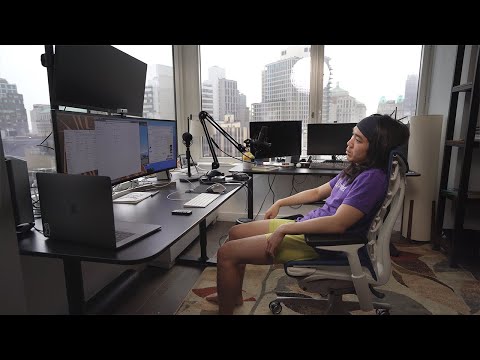
2021. I'd just joined a 600-person company as a senior engineer. Fully remote. Dream setup. Within eight months I was being described in calibration as 'solid but not quite senior-level material.' By my own manager. Who I'd never met in person.
I wasn't underperforming. I was invisible. Those are two completely different problems, and remote work collapses the distance between them fast.
The visibility trap nobody warned me about
When you're in an office, you get ambient credit. Someone overhears you debug a gnarly race condition. Your manager sees you help the new hire at the whiteboard. You exist in people's peripheral vision, and that existence does quiet career work for you.
Remote strips all of that out.
What's left is only what you explicitly surface. And most engineers, myself included, were trained to let the code speak for itself. Ship good work. Stay humble. Don't self-promote.
That playbook fails remotely. Hard.
A teammate of mine, I'll call him Raj, shipped a caching layer in 2021 that cut our API p99 latency from 840ms down to 210ms. Significant work. He put it in the Friday Slack update. One paragraph. No context, no framing, no stakeholder ping. His manager was in three other meetings that week and missed it entirely. Six months later, Raj didn't get the L5 promo he'd been working toward. The feedback? 'We're not sure of his scope of impact.'
The work was real. The impact was real. The visibility wasn't.

What actually works (and what I got wrong first)
I spent about four months trying to fix this by being louder in Slack. More messages. More emoji reactions. More async commentary. It made me feel productive and changed approximately nothing.
Here's what actually moved the needle.
First, I started writing a weekly update in Notion — not for my manager, for me. Forced me to articulate what I'd done in terms of outcomes, not tasks. 'Shipped the new auth flow' became 'cut login errors by 34% which was blocking the growth team's Q3 experiment.' Completely different sentence. Completely different career impact.
Second, I got strategic about where I spent my async words. A comment in a Linear ticket that three people see is not the same as a thread in the engineering-wide Slack channel where your skip-level hangs out. Same effort. Wildly different reach.
Third, and this one's uncomfortable: I asked my manager directly how she formed impressions of engineers she didn't see every day. She paused for a long time. Then she said, 'Honestly? I rely on what comes up organically in other conversations. If nobody's mentioning you, I notice that.'
That sentence reoriented my entire approach to remote work.
As a manager, here's what I see now
I manage a team of eight, fully distributed across four time zones. The engineers who grow fastest aren't the loudest. They're the ones who've figured out that communication is a deliverable, not an afterthought.
They document decisions in Notion. They post Loom walkthroughs of their PRs before review. They frame their work in terms of what it unblocked, not what it implemented.
Remote work is a skill. A learnable one. But most companies hire you for your engineering skills and assume you'll figure the rest out. Most people don't. Most people just get quieter and wonder why their career stalled.
Don't be most people.