Kiro Doesn't Write Code. It Runs Missions.
Everyone's using AI to autocomplete functions. That's not the game anymore. Kiro is what happens when the AI stops suggesting and starts executing — and most teams aren't ready for what that actually means in production.
In 2023, our payments team at a fintech running 12M daily transactions wasted 11 weeks on a feature that should've taken 3. Not because the engineers were bad. Because the spec lived in Notion, the tasks lived in Linear, the context lived in someone's head, and the AI tools they were using could only see the file that was open. We burned roughly $340k in eng salaries on coordination overhead. Pure waste.
That's the problem Kiro is actually solving. Not code generation. Coordination collapse.
What Agentic Actually Means
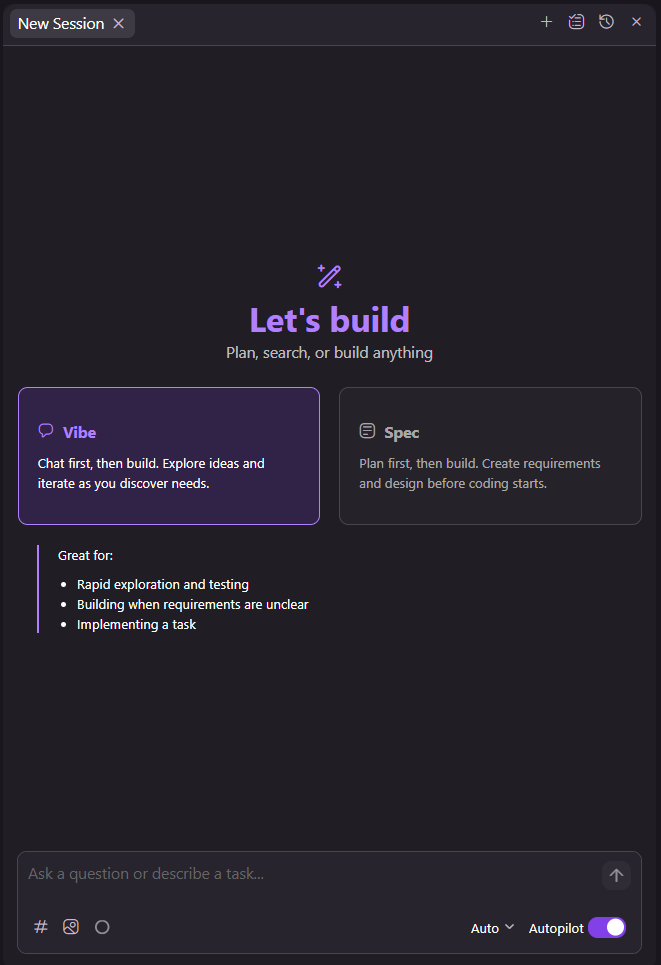
Here's the thing — everyone slapped the word "agentic" on their product in 2024. It means nothing now. What Kiro does that's different: it operates on specs, not prompts. You describe the system you want to build. Kiro breaks that into tasks, writes implementation plans, executes across files, runs checks, and iterates. It's not answering your question. It's working your ticket.
The mental model shift is real and it's jarring. You're not the driver anymore. You're the tech lead doing code review on an engineer who works at 3am and never asks for a Slack break.

The Part That'll Actually Break Your Workflow
Don't do this: hand Kiro an ambiguous spec and walk away. I've seen this kill production trust fast. The agent will make decisions. It'll pick the implementation path that looks locally optimal. It won't know that your team never uses raw SQL because you had a data leak in 2021 and you're now religious about the ORM layer. It doesn't know your ghosts.
Kiro has something called spec-driven development baked into its core loop. You write a structured spec — not a comment, not a ticket title, an actual spec with requirements and constraints. The agent anchors to that. This sounds like overhead. It's not. It's the thing that makes the output not be garbage.
Where This Gets Dangerous
The agents are fast. That's the trap. You get a PR in 4 minutes and your brain thinks it must be shallow. It's not always shallow. I've watched Kiro refactor an entire auth module, write migration scripts, update tests, and modify 3 config files in one shot. That's not autocomplete. That's a junior engineer's morning.
The review discipline has to go up, not down. Your job is now less about writing and more about being a really paranoid principal reviewer. Treat every Kiro PR like it was written by someone smart who doesn't know your production environment. Because that's exactly what it is.

What This Means for Staff Engineers
Your value isn't in the typing. It never was, but now it's undeniable. The engineers who'll thrive in this model are the ones who can write a spec that actually captures the non-obvious constraints. Who know which shortcuts get you killed at scale. Who can read a 47-file diff and find the one line that'll wake them up at 2am.
The engineers who'll struggle are the ones whose entire identity is in the cleverness of the implementation. That identity is getting automated. Not the judgment. The cleverness.
Kiro isn't the future of coding. It's the end of coding as the primary bottleneck. The bottleneck is now spec quality and review rigor. Same as it always should've been.