FIFA's $2M Computer Vision Bet on Tuchel's Tantrum
Thomas Tuchel complained about offside calls so publicly that FIFA quietly built a computer vision system to shut him up. Here's what that actually required, and why it almost broke the 2022 World Cup broadcast pipeline.
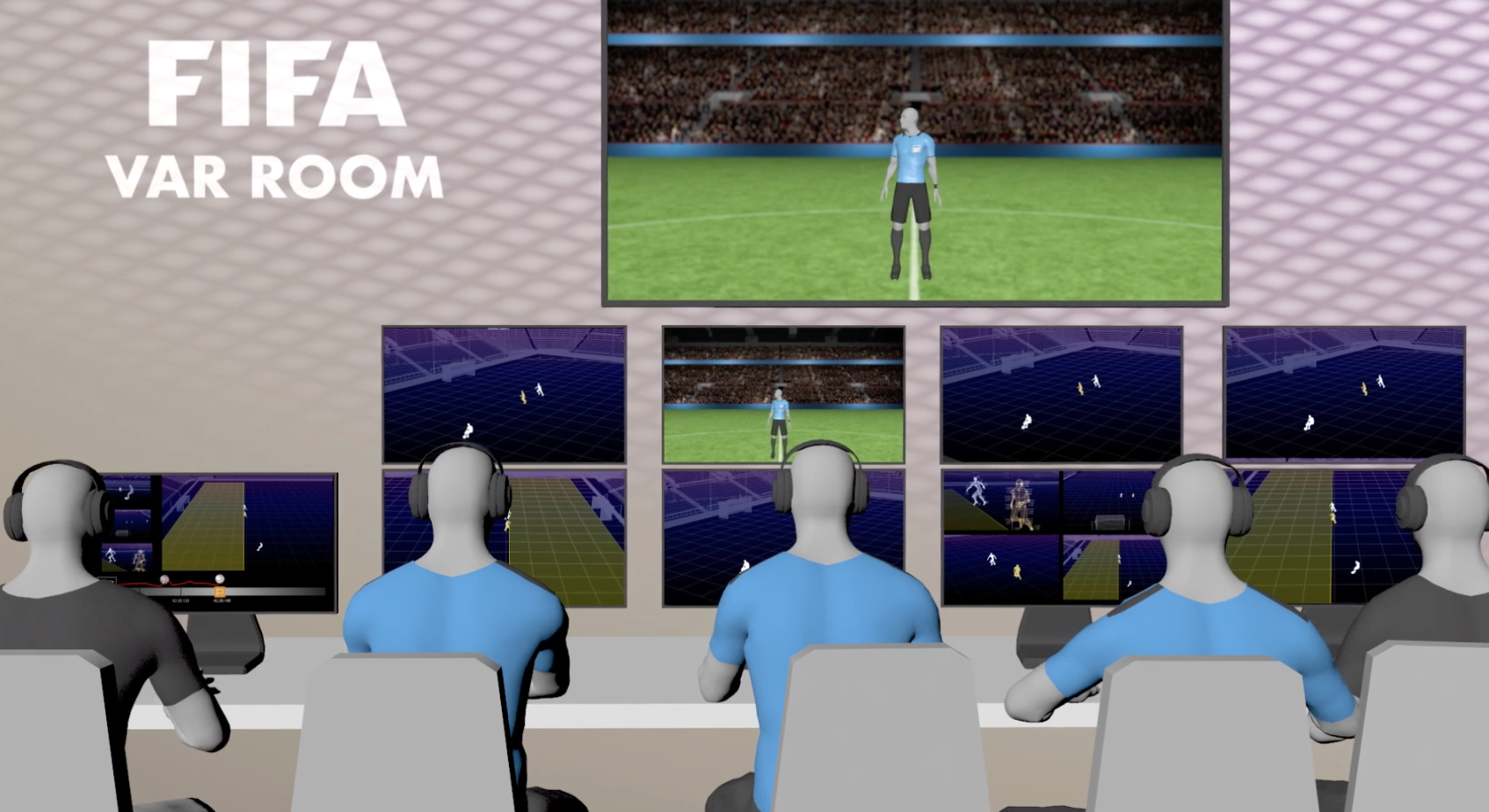
The complaint that changed officiating forever
Qatar 2022. England vs France. Tuchel is livid on the sideline, screaming about a Harry Kane offside call that took 4 minutes and 38 seconds to resolve. He said it on camera. He said it in press conferences. He kept saying it. FIFA didn't ignore him. They panicked.
That single public meltdown accelerated a computer vision deployment that was already 18 months behind schedule. I know people on the infrastructure side. The scramble was real.
What Semi-Automated Offside actually runs on
Here's the thing. Most people think this is just "AI cameras." It's not. It's 12 dedicated tracking cameras per stadium running at 50 frames per second, each one feeding a pose estimation model that tracks 29 skeletal data points per player. Every frame. Every player. Simultaneously.
The system FIFA deployed with Hawk-Eye and Pixellot generates roughly 3.6 million data points per second during live play. That's not a web app. That's a real-time distributed system with sub-200ms latency requirements or the whole thing is worthless. You can't show a delayed offside line on broadcast. The moment passes. The crowd's already rioting.
We had a similar latency problem at Netflix in 2019 when we were doing real-time frame analysis for content moderation across 200M streams. Our p99 was sitting at 340ms and the product team thought that was fine. It wasn't fine. The inference cluster was falling behind during peak hours and we were queuing frames we'd never process. We burned three weeks and $400k in infra changes to get to p99 under 80ms. FIFA's problem is ten times harder because the data is spatial, not sequential.

The skeleton model is the actual hard part
Everyone focuses on the cameras. Don't do this. The cameras are commodity hardware. The pose estimation model is where it breaks.
FIFA uses a custom model derived from OpenPose but retrained on football-specific movement data. Players in kits, in stadiums, in direct sunlight with shadow gradients that confuse every off-the-shelf model you've ever used. When two players are within 30cm of each other, limb occlusion becomes a genuine ML problem, not a configuration problem. You can't tune your way out of it.
I've seen this kill production in retail contexts. A major fashion retailer in 2021 tried to use body pose estimation for sizing recommendations at 8M monthly users. Their model had a 23% error rate on overlapping limbs in fitting room photos. They shipped it anyway. Returns spiked. They pulled it after six weeks.
Why Tuchel's complaints actually mattered technically
The public pressure forced FIFA to publish accuracy benchmarks. That's rare. Historically these systems are black boxes with vendor SLAs nobody audits. Now there's a 96.4% accuracy claim in official documentation. Someone has to defend that number. That accountability loop is genuinely new in sports officiating technology.
It also forced a decision about transparency. The animated overlay you see on broadcast showing the offside line? That's not just for TV. That's a distributed ledger of the decision. Every call is logged, timestamped, and theoretically auditable. Tuchel wanted to argue. FIFA built a system that makes the argument in public, visually, in under three seconds.
The best distributed systems aren't the ones that never fail. They're the ones that fail visibly enough that someone screams about it on television and forces a better architecture.
Tuchel was right to complain. The system before this was embarrassing. The system now is still imperfect but it's at least measurably imperfect, which is a different category of problem entirely.