AI Coding Agents Broke Our Deploy Pipeline
Everyone's racing to add AI coding agents to their stack. Most teams are doing it wrong and don't know it yet. Here's what 18 months of production use actually looks like, not the demo.
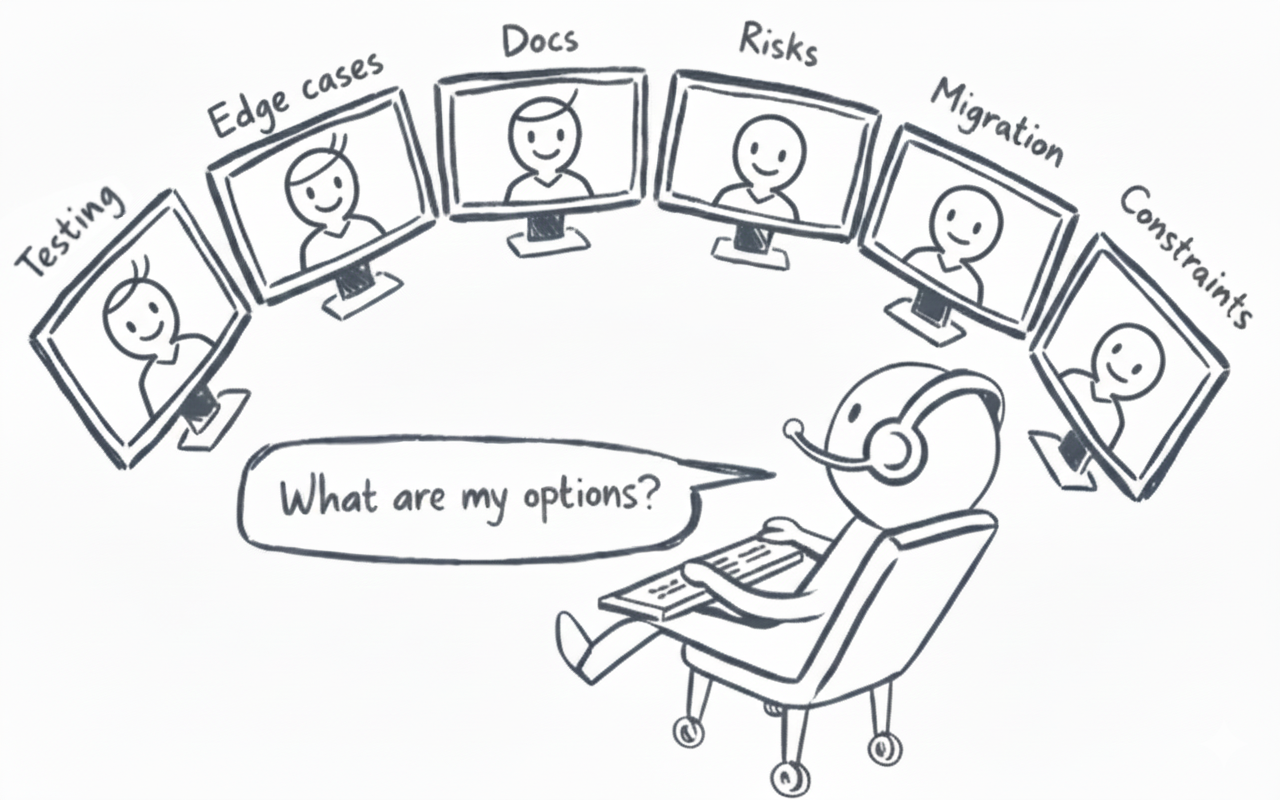
We shipped an AI coding agent to 40 engineers in Q1 2025. By March we had a 6-hour outage that cost us roughly $340k in SLA credits. The agent wrote a database migration. Nobody reviewed it carefully because, hey, the AI checked it. It dropped a non-nullable column with live traffic hitting it. Postgres doesn't care that your AI was confident.
The Actual List (Ranked By What Survives Contact With Production)
I've spent 18 months running these things on real codebases. Not toy projects. Not demos. I'm talking 4 million lines of Python, TypeScript, and Go with all the legacy debt that implies. Here's what I actually know.
Cursor is still the one everyone defaults to and it's still the best general-purpose option in 2026. The 0.43 release fixed the context window thrashing that was killing performance on large monorepos. Before that fix, we were watching it hallucinate import paths for files it had seen 30 seconds earlier.
GitHub Copilot Workspace has gotten serious. Not the autocomplete toy from 2022. The agentic version can now open a GitHub issue and close it with a working PR. I've seen it handle small bug fixes end-to-end without human intervention. Don't trust it near your auth layer.
Devin (Cognition) is what everyone was hyping a year ago. Here's the thing: it's genuinely impressive on greenfield work and genuinely dangerous on systems it doesn't fully understand. That's most systems. We used it for internal tooling. Kept it away from anything touching payments.
Claude Code is the sleeper. Anthropic's CLI agent has better reasoning about code consequences than anything else I've used. It's slower. It's worth it for the tasks where you need it to actually think about what it's doing to your database indexes.
Aider is the open-source option that doesn't get enough credit. Works with any model backend. If you're running GPT-4o or Claude 3.7 through your own API keys for cost control, Aider is your answer. We run it in CI for specific low-risk refactor tasks.
Cline, Continue, and Supermaven all live in the VS Code extension ecosystem. They're fine. Nothing in that category has made me rethink anything. They're autocomplete with better marketing.

What Nobody Tells You About Agentic Code Generation
The failure mode isn't the code being wrong. You can review wrong code. The failure mode is the code being subtly wrong in a way that only surfaces under load, six weeks later, at 2am. I've seen this kill production twice.
Every agent I've listed will confidently write a Redis cache implementation that doesn't handle connection pool exhaustion. It'll work fine in staging. It'll work fine for your first 10k users. Then you hit a traffic spike and your PagerDuty goes off and you're staring at a stack trace at midnight wondering why your cache layer is taking down your API servers.
Don't do this: let an agent write infrastructure code without a human who understands the infrastructure reading every line. Not skimming. Reading.
The agent doesn't know what it doesn't know. That's your job.
The Three You Should Actually Evaluate
If I had to pick: Cursor for daily development, Claude Code for high-stakes reasoning tasks, Aider for automated CI workflows where you control the model. Everything else is either catching up or solving a problem you don't have yet.
The rest of the 18? Most of them are demos waiting to become startups waiting to become acquisitions. I've watched this cycle four times at three companies. Save your evaluation bandwidth.